
Railway Transportation
2025-08-28
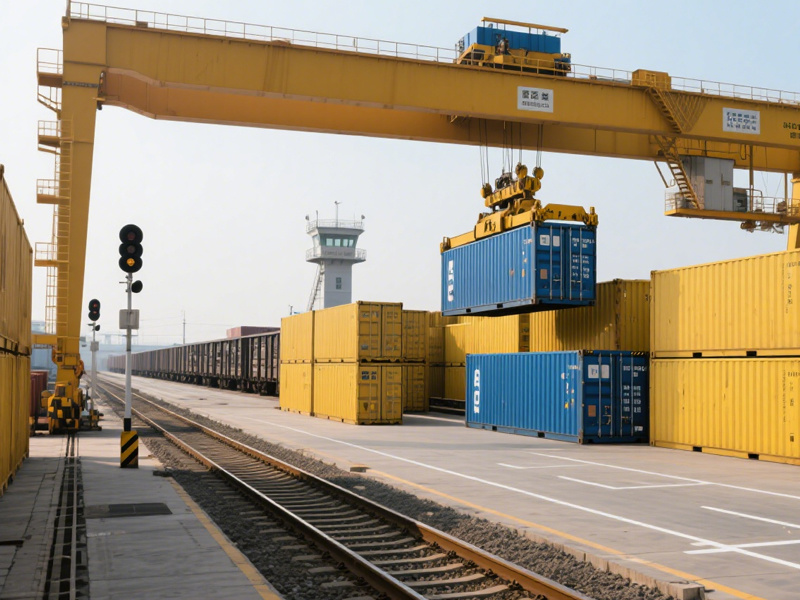
Rail transport, as an important complement and extension of air cargo, leverages its core advantages of stable timeliness, large carrying capacity, and low logistics costs to form an integrated "air-rail intermodal" solution. The specific service content covers the following six core sections:
1. Multi-dimensional transportation network coverage
- Trunk transportation network: Relying on the national high-speed rail freight lines and conventional railway trunk lines, covering more than 30 provincial-level administrative core hubs (such as Beijing, Shanghai, Guangzhou, Chengdu, Xi'an, etc.), directly reaching over 200 prefecture-level city freight stations. The high-speed rail freight lines support "evening departure, morning arrival" and "morning departure, noon arrival" timeliness standards, suitable for medium and short-distance high-timeliness cargo transfer needs;
- International intermodal channels: Through cross-border channels such as China-Europe Railway Express (gathering centers in Chongqing, Xi'an, Zhengzhou, etc.), China-Laos Railway, China-Vietnam Railway, providing international rail transport services to Europe (Hamburg, Duisburg) and Southeast Asia (Bangkok, Hanoi). It can connect with international hub ports of air cargo, achieving a multimodal intermodal closed loop of "domestic rail consolidation - air export - overseas rail distribution";
- Last-mile connection network: In cooperation with regional logistics service providers, offering "last mile" connection services from railway freight stations to airport cargo terminals, customer warehouses, and port docks. Supports vehicle types such as box trucks and container trailers, solving the cargo "station-to-door" transfer connection problem.
2. Full-category cargo adaptation solutions
- General cargo transport: For goods without special transportation requirements such as electronic components, light industrial products, clothing and textiles, mechanical equipment, providing standardized transport carriers like 20-foot/40-foot containers, covered wagons, and open wagons. Single car load capacity can reach 25-60 tons, suitable for large-volume cargo low-cost transfer;
- Special cargo dedicated services:
- Cold chain cargo: Using railway refrigerated containers (temperature control range -25℃ to 25℃), equipped with real-time temperature monitoring systems, suitable for temperature-controlled goods such as fresh produce, pharmaceuticals (must comply with GSP standards), chemical raw materials, etc. Can connect with air cargo cold chain lines to reduce long-distance cold chain transport costs;
- Oversized and overweight cargo: Using special flatcars, depressed center flatcars, and other specialized vehicles to handle oversized cargo such as large machinery and aviation equipment, providing customized loading plans and obstacle clearance coordination services along the route;
- High-value cargo: For precision instruments, luxury goods, high-value electronic equipment, providing 24-hour full escort, GPS real-time positioning, and enclosed container transport services, synchronizing with the air cargo insurance and claims system.
3. Flexible timeliness and space guarantee
- Timeliness tiered services:
- Express trains: High-speed rail freight trains and fixed direct trains, with timeliness comparable to short-distance air transport (e.g., Beijing to Shanghai within 24 hours, Guangzhou to Changsha within 8 hours), suitable for time-sensitive but cost-controlled cargo;
- Economy trains: Conventional railway trains, with timeliness 1-3 days longer than express trains, freight costs 30%-50% lower, suitable for bulk cargo and non-urgent supply materials transport;
- Space guarantee mechanism: Establishing long-term cooperative relationships with railway departments to provide fixed space reservation services for air cargo enterprises, especially during peak freight seasons (such as e-commerce promotions, holidays), allowing priority space locking to avoid "air-rail intermodal" connection efficiency being affected by tight railway capacity.
4. Integrated operations and collaborative services
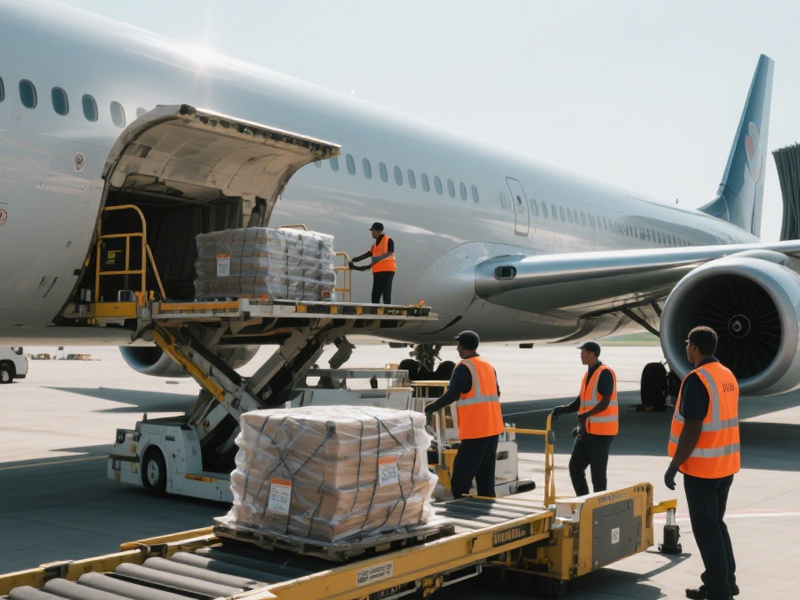
- Seamless connection operations: Setting up joint operation points at airport cargo terminals and railway freight stations to achieve seamless transfer of cargo "air unloading - rail loading" and "rail unloading - air loading," reducing secondary handling, lowering damage rates (transfer timeliness controlled within 2-4 hours);
- Document collaboration: Integrating air waybill and rail waybill information to realize "one ticket to the end" document flow. Cargo requires only one set of documents from origin to destination, reducing repeated declaration processes for enterprises. Supports electronic waybills and data interfacing with air cargo systems for real-time cargo information sharing.
5. Value-added supporting services
- Warehousing and transfer services: At railway hub nodes (such as Zhengzhou International Land Port, Chengdu International Railway Port), equipped with bonded warehouses and general transfer warehouses, providing air cargo enterprises with cargo temporary storage, distribution, labeling, packaging reinforcement, etc., meeting the operational needs of "rail consolidation first, then air distribution";
- Customs declaration and inspection collaboration: In cooperation with customs and commodity inspection departments, setting up "one-stop" customs declaration and inspection windows at railway freight stations, synchronizing with air cargo import and export customs procedures, achieving seamless customs declaration and inspection for "rail entry - air exit" and "air entry - rail exit" cargo, shortening clearance time (clearance time can be compressed to 1-2 working days);
- Emergency support services: For air cargo emergencies (such as flight delays, cancellations), providing emergency rail transfer plans, initiating cargo rerouting within 2 hours to ensure cargo arrives at the destination as originally planned, reducing losses caused by air cargo delays.
6. Visual monitoring and after-sales guarantee
- Full-process visual tracking: Using IoT technology, equipping each cargo with electronic tags to monitor cargo location, temperature, humidity, vibration, and other data in real time. Enterprises can check cargo status anytime via PC or mobile devices, complementing air cargo monitoring systems;
- After-sales and claims services: Establishing a dedicated customer service team providing 24/7 consultation and exception handling services. If cargo delay, damage, or loss is caused by rail transport, quick compensation will be made according to air cargo insurance standards, protecting the rights and interests of enterprises and customers.
railway transportation
Previous Page:
Next Page:
Recommended Business

Phone:
Email:
Leave a Message
Copyright © Beijing Anda Changshun Air Freight Forwarding Co., Ltd.
E-mail:
Tel:
在线客服添加返回顶部
右侧在线客服样式 1,2,3 1
图片alt标题设置: Beijing Anda Changshun Air Freight Forwarding Co., Ltd.
表单验证提示文本: Content cannot be empty!
循环体没有内容时: Content uploading, please wait...
CSS / JS 文件放置地