
Air Cargo Inbound and Outbound
2025-08-28
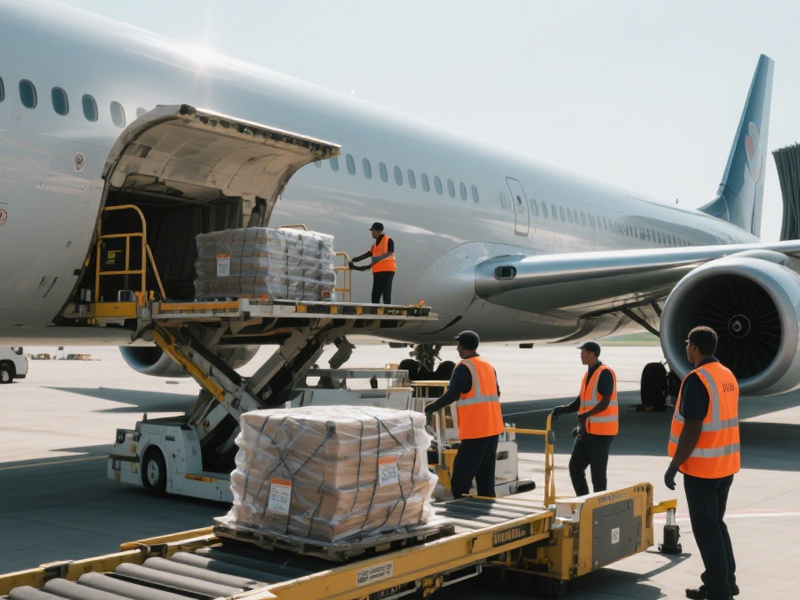
As an efficient logistics method connecting the world, air cargo services cover the entire process from cargo receipt, handling, transportation to final delivery, with each step dedicated to ensuring the safe, timely, and efficient flow of goods. The following will detail the core service contents of air cargo companies from the two dimensions of inbound and outbound services.
1. Air Cargo Inbound Services
Inbound services mainly refer to a series of receiving, handling, notification, and delivery services provided by air cargo companies to customers after the cargo is transported from the departure airport to the destination airport, ensuring the cargo smoothly reaches the consignee.
(1) Flight Information Tracking and Prediction
After the flight carrying the cargo takes off, the cargo company will track the flight status in real time through the air logistics system, including flight departure time, flight status, estimated arrival time, etc. In case of flight delays, diversions, or other special situations, the company will immediately communicate with the airline to obtain the latest information, predict the impact on the cargo receiving process in advance, and prepare responses to avoid cargo retention due to delayed information.
(2) Cargo Pickup and Receipt at the Airport
- After the flight lands, the cargo company's professional operators will bring relevant documents (such as air waybills, pickup authorization letters, etc.) to the airport cargo terminal to coordinate with airport staff and handle the pickup procedures.
- During the pickup process, operators will strictly verify the quantity, number of pieces, and packaging condition of the cargo according to the waybill information, checking for damage, loss, moisture, or other issues. If abnormalities are found, they will immediately confirm with the airport side, take photos as evidence, and promptly inform the customer to negotiate subsequent handling plans.
- For special cargo (such as refrigerated goods, fragile items, hazardous materials, etc.), special equipment (such as refrigerated trucks, shockproof pallets) will be used for pickup to ensure the cargo maintains its original quality and safety during transfer.
(3) Cargo Customs Clearance Services
- If the cargo is imported, the cargo company will assist customers in handling customs clearance procedures. First, they collect the customs clearance documents provided by the customer, including commercial invoices, packing lists, certificates of origin, customs clearance authorization letters, etc., carefully checking the completeness and accuracy of the documents to avoid clearance delays caused by missing or incorrect information.
- Professional customs brokers will submit clearance applications to customs, accurately declaring the cargo's name, specifications, quantity, value, and other information according to the cargo category and customs supervision requirements. During the declaration process, if customs inspection occurs, they will actively cooperate with customs officers to conduct cargo inspections and provide required supplementary documents to ensure smooth completion of the inspection.
- They will promptly follow up on the clearance progress, maintain communication with customs, resolve issues arising during clearance (such as tariff disputes, document discrepancies), and ensure the cargo completes clearance within the stipulated time and smoothly enters the domestic logistics process.
(4) Cargo Warehousing Management
- After customs clearance, if the customer does not need to pick up the cargo immediately, the cargo company will store the cargo in a dedicated warehouse center. The warehouse center is equipped with comprehensive security systems (such as surveillance cameras, access control systems), fire protection systems, and temperature and humidity control systems, providing different types of storage services according to the cargo characteristics, such as general cargo storage, refrigerated storage (temperature controlled between -20°C and 25°C), and special storage for hazardous materials.
- Detailed registration of incoming cargo is conducted, establishing inventory ledgers recording the cargo's storage time, quantity, location, shelf life (if any), and other information to achieve precise cargo management. Regular inventory checks are performed to ensure consistency between records and actual stock, preventing loss or misdelivery.
- Inventory inquiry services are provided to customers, who can check the cargo inventory status anytime via online systems or phone, facilitating reasonable scheduling of pickup times.
(5) Cargo Notification and Delivery
- Once the cargo completes customs clearance and storage, the cargo company will notify the consignee via SMS, phone, or email, informing them that the cargo has arrived and reminding them to prepare relevant documents (such as ID cards, copies of business licenses) for pickup, or confirm delivery address and time if the customer chooses home delivery service.
- If the customer chooses self-pickup, staff will verify the consignee's identity and pickup documents again at the pickup site, assist in handling pickup procedures after confirmation, and hand over the cargo to the consignee. The consignee is reminded to inspect the cargo condition on site and sign for confirmation if there are no issues.
- If the customer chooses home delivery, the cargo company will arrange a professional delivery team to deliver the cargo according to the specified address and time. Before delivery, the cargo will be repackaged and reinforced if necessary to ensure it is not damaged during transportation. During delivery, the customer will be updated on the delivery progress in real time. Upon arrival, the consignee is required to inspect the cargo in person and sign for confirmation if there are no issues, completing the delivery process.
2. Air Cargo Outbound Services
Outbound services refer to the entire process from the customer's entrusting the cargo company to transport the cargo until the cargo is successfully loaded onto the flight and flies to the destination airport, focusing on ensuring the cargo is dispatched on time and safely according to customer requirements.
(1) Customer Consultation and Order Acceptance
- Customers inquire about air cargo services via phone, online platforms (such as official websites, mini-programs), or offline stores. Customer service staff will answer questions in detail regarding transportation time, freight charges, cargo packaging requirements, prohibited items regulations, etc., providing professional logistics solution suggestions (such as recommending different flight classes based on cargo urgency, recommending suitable transportation methods based on cargo characteristics).
- After the customer confirms the entrustment, customer service staff will assist in filling out the cargo order, collecting relevant cargo information (such as cargo name, quantity, weight, volume, destination, consignee information, etc.), and verifying the accuracy of the information. They will also inform the customer of the required documents (such as commercial invoices, packing lists, hazardous goods identification reports, depending on cargo type) and the time and place for cargo handover.
(2) Cargo Pickup at Door or Customer Delivery Reception
- If the customer requires door-to-door pickup service, the cargo company will arrange pickup personnel to collect the cargo at the specified time and place. Upon arrival, the pickup personnel will verify that the cargo information matches the order and check whether the packaging meets air transport requirements (such as packaging firmness, absence of damage, compliance with hazardous goods packaging standards). If the packaging does not meet requirements, they will explain the situation to the customer and provide packaging reinforcement services (such as providing cartons, foam, tape, or assisting the customer with packaging).
- If the customer chooses to deliver the goods to the freight company's outlet or warehouse by themselves, the staff will verify the goods information and documents on-site upon receipt, inspect the packaging condition of the goods, and after confirmation, issue a receipt to the customer as proof of handover.
(3) Cargo Security Inspection and Compliance Check
- All outbound cargo must undergo strict security checks. The freight company will send the goods to the airport's designated security inspection area or its own inspection point for security screening. During the inspection, if prohibited items (such as flammable and explosive materials, controlled knives, drugs, etc.) are found in the cargo, transportation will be immediately stopped and handled according to relevant regulations, while notifying the customer. If suspected dangerous goods are found inside the packaging but not declared by the customer, the customer will be required to provide relevant identification reports, and the cargo will only proceed after confirming safety.
- In addition to security checks, the compliance of the cargo will be inspected, including whether the declared information is true and accurate, and whether it complies with the import policies and regulatory requirements of the destination country or region (such as whether a certificate of origin or quarantine certificate is required). For special cargo (such as dangerous goods, live animals, valuables), inspections will be strictly conducted according to the International Air Transport Association (IATA) regulations and the relevant requirements of the destination country to ensure the cargo meets transportation standards and to avoid rejection by airlines or clearance issues at the destination airport due to compliance problems.
(4) Cargo Weighing, Measurement, and Air Waybill Preparation
- After completing security and compliance checks, staff will accurately weigh and measure the cargo, recording the actual weight and volumetric weight (volumetric weight = length × width × height / 6000, unit: kg), and use the larger of the two as the chargeable weight to calculate the freight for the customer.
- Based on the cargo information and customer requirements, an Air Waybill (AWB) will be prepared. The Air Waybill is an important document for cargo transportation, containing key information such as the shipper, consignee, carrier, cargo details, transportation route, and freight amount. Staff will carefully verify the AWB information to ensure accuracy, preventing misdelivery or failure to deliver due to errors. After preparation, a copy of the AWB will be given to the customer as a basis for tracking the cargo status and claims.
(5) Cargo Consolidation and Flight Loading
- For small shipments, the freight company will consolidate multiple customers' goods into one batch to improve transportation efficiency and reduce costs. During consolidation, the loading order and position will be reasonably arranged according to the characteristics of the cargo (such as weight, size, and fragility) to avoid damage caused by squeezing or collision during transportation.
- Maintain close communication with airlines to understand flight seat availability and select suitable flights for the cargo based on the customer's transportation time requirements. Before the flight departs, the cargo will be delivered to the airline's freight station, where staff will coordinate with airline personnel to handle cargo handover and seat confirmation procedures. In case of tight seat availability, active coordination with the airline will be made to prioritize loading, ensuring the cargo is dispatched as planned. Meanwhile, flight status will be tracked in real time; if delays or cancellations occur, transportation plans will be promptly adjusted, subsequent flights arranged for the customer, and the customer notified immediately.
(6) Cargo Transportation Status Tracking and Information Feedback
- After the cargo is loaded onto the flight, the freight company will track the transportation status in real time through the air logistics system, including flight departure, in-flight status, and estimated arrival time at the destination airport.
- Regular updates on the cargo transportation progress will be provided to customers. Customers can check the real-time status of their cargo by entering the AWB number in the online system or obtain relevant information through customer service. If any abnormal situations occur during transportation (such as flight delays or cargo loss), emergency plans will be immediately activated, communication with the airline will be conducted to resolve the issue, and the customer will be promptly informed to discuss subsequent handling measures to protect the customer's rights.
Air cargo
Previous Page:
Next Page:
Recommended Business


Phone:
Email:
Leave a Message
Copyright © Beijing Anda Changshun Air Freight Forwarding Co., Ltd.
E-mail:
Tel:
在线客服添加返回顶部
右侧在线客服样式 1,2,3 1
图片alt标题设置: Beijing Anda Changshun Air Freight Forwarding Co., Ltd.
表单验证提示文本: Content cannot be empty!
循环体没有内容时: Content uploading, please wait...
CSS / JS 文件放置地